Our Story
- Home
- Our Story
History
The Story of St. Charles Lwanga Catholic Parish Ntinda
St. Charles Lwanga Catholic Church, Ntinda stands as a parish of the metropolitan Archdiocese of Kampala — the oldest and most prominent Catholic diocese in Uganda, with its mother church at the iconic Rubaga Cathedral on Rubaga Hill.
1879
The Catholic Faith Arrives in Uganda
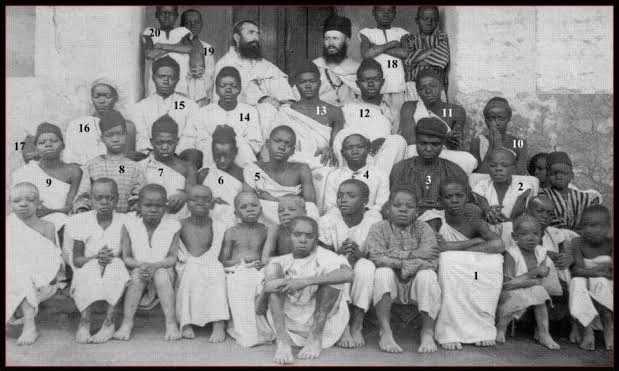
The Catholic Church’s presence in Uganda began on 17 February 1879, when Fr. Siméon Lourdel and Brother Amans Delmas of the White Fathers landed at Kigungu on the shores of Lake Victoria, invited by Kabaka Muteesa I of Buganda. They settled at the royal court and began instructing the young pages who served the king, among them Charles Lwanga, in the Catholic faith.
1886
Martyrdom
As more pages embraced Christianity, the new Kabaka, Mwanga II, grew hostile to a faith he saw as undermining his authority over them. Despite mounting threats, Charles Lwanga and twenty-one companions refused to renounce what they had come to believe, and were sentenced to death by fire. On 3 June 1886, they were burned alive at Namugongo, the first blood of martyrs shed in Uganda.
1964
First Saints from Sub-Saharan Africa
Their cause for canonisation was confirmed by a miracle attributed to their intercession involving two missionary sisters who had contracted bubonic plague were healed after a novena of prayer offered through the martyrs. On 18th October 1964, Pope Paul VI proclaimed them Saints, the first from Sub-Saharan Africa.
News of their faith and courage spread rapidly through Buganda and beyond, drawing many more converts to Christ in the years that followed. What began with two missionaries and a handful of believers at the royal court grew, within a few decades, into a Church established in parishes and communities across the country, the same Church whose story, in Ntinda, continues below.
1973
1 January
At this time, Ntinda has no sub-parish of its own and falls entirely under Naguru Parish; the system of Small Christian Communities (“bubondo”) has not yet reached the area.
Long-standing local memory holds that the Uganda Martyrs, led by the future St. Charles Lwanga, passed through Ntinda on their forced walk to martyrdom at Namugongo. This memory would later shape the choice of the parish’s patron saint.
1977
Naguru Parish’s resident priest, Fr. Serunkuuma, is attacked and nearly killed. Archbishop (then Cardinal) Emmanuel Nsubuga withdraws the priests from Naguru for their safety, leaving the parish without a resident priest between 1977 and 1979.
With Naguru effectively closed, Ntinda’s Catholics have no nearby place to worship. They begin gathering informally, carrying a table to serve as an altar, along with stools and benches from Eng. Kaketo’s and Mr. John Mussi’s homes, to pray on the verandah of Ntinda Primary School every Sunday. This is remembered as the birth of the Ntinda Christian community. During this period, Mr. John Kiwanuka and Mr. Ignatius Kalemeera take on the task of finding priests to say the verandah Mass, sourcing them from St. Mbaaga’s Seminary Ggaba, and student priests from Makerere and Kyambogo Universities.
1979
Fr. Joseph Mugambe is posted to Naguru Parish as resident priest, after the Christians of Naguru install security measures (burglary-proofing of windows and doors) to reassure Cardinal Nsubuga of the priests’ safety.
Fr. Mugambe visits the Ntinda community praying on the school verandah and encourages them to find a more suitable venue. Around the same time, Ntinda Primary School gets a new headteacher, [CONFIRM name: sources give both “Mr. Patrick Mukasa Lutaya” and “Mr. Patrick Mukasa Mutyaba” in different places, possibly the same person misspelled, or two separate headmasters at different times], who permits the Christians to pray in a classroom after Mass concludes at the school.
1982
Early
A group of founding members, including the late Dan Mpungu, the late Paul Kagimu, the late Francis Were, John Mary Kiwanuka, and Eng. Valentine Mwase, meet informally and resolve to build a church closer to home rather than continuing to trek to Naguru or surrounding parishes (Mbuya, Christ the King, Mulago).
1980
The growing community decides that their future church will be named for St. Charles Lwanga, specifically because the area lies on the route the Uganda Martyrs walked to their execution at Namugongo. This is the origin of the parish’s name and identity.
Pioneers Late Joseph Kakooza, Late Daniel Mpungu, and Late George Sewankaambo (supported by Joseph Muwonge) take on the search for land.
Fundraising begins in earnest: novenas to St. Jude Thaddeus for intercession, and film shows organised by Mr. Lugalambi, Eng. Albert Kiraga, and the late Architect Paul Kagimu, screened from a theatre improvised out of a papyrus-mat enclosure, at a small fee per showing. Suitable land is identified and secured, with a certificate of title obtained, setting the stage for construction.
1983
12 March
12 March: The foundation stone of the St. Charles Lwanga Church building is laid by the late Rt. Rev. Bishop Joseph Mukwaya.
A Papal visit is referenced in connection with the site of St. Charles Lwanga’s baptism and martyrdom at Namugongo, but the year given in the scan (“1996”) does not match either of the two Papal visits to Uganda on record (Pope Paul VI in 1969, or Pope John Paul II in 1993). Worth verifying which visit, and whether it connects directly to the Ntinda community’s history, before including it.
2008
December
2009
17 April
2013
A date of 15th December 2013 appears in the text in connection with something being “opened”; the surrounding text is garbled and it’s unclear whether this refers to the church building itself, an office, or something else.
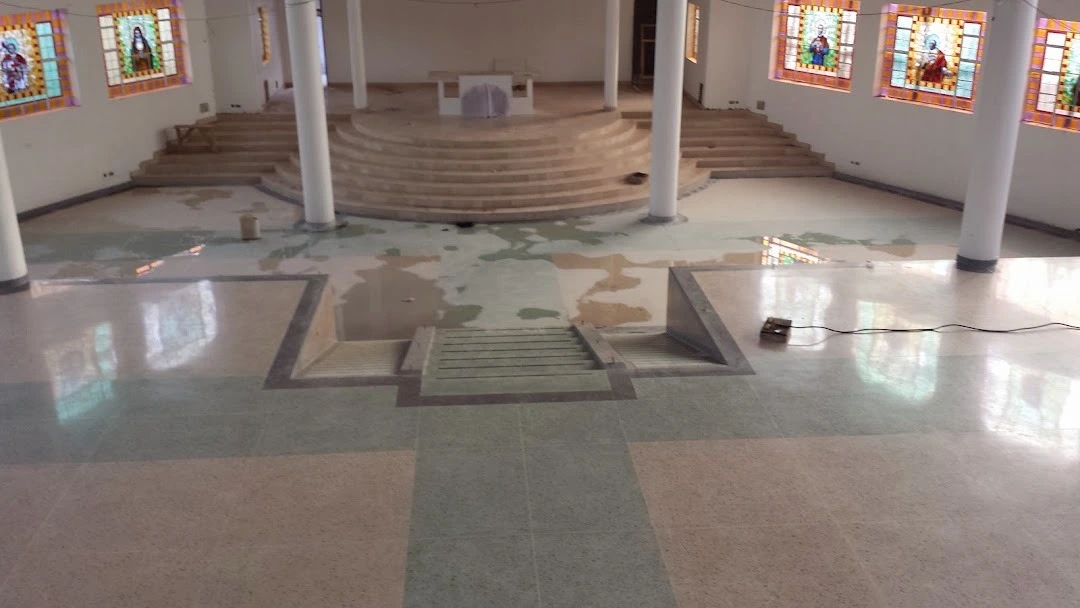
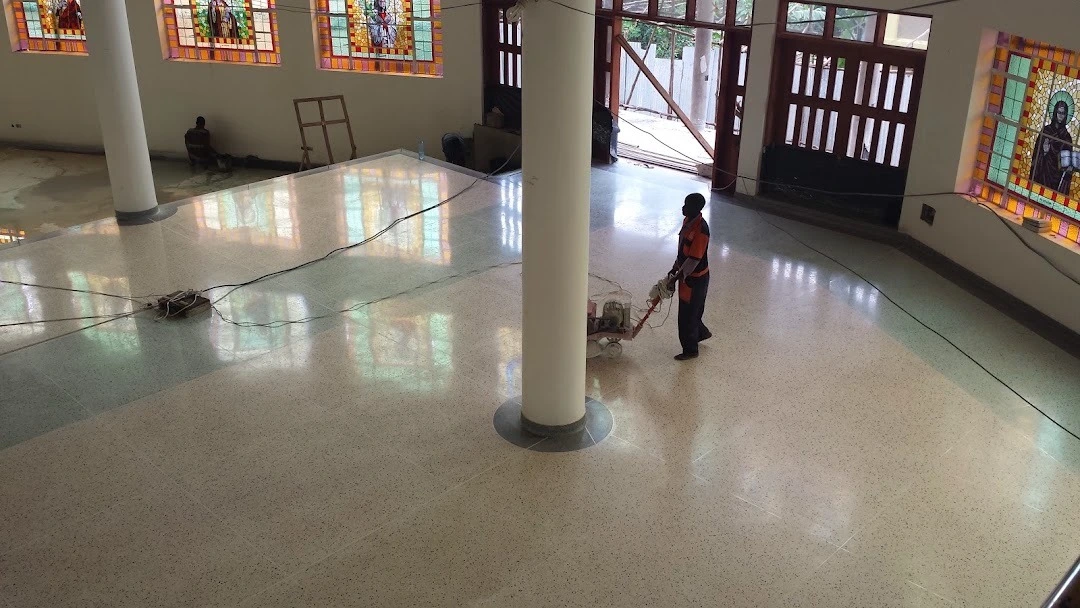
Throughout this period: the altar is built with a reinforced concrete core and white marble terrazzo, its front face carved by local artist Peter Oloya using the traditional “lost wax” casting method, depicting the Last Supper. The 14-piece Stations of the Cross, in fibreglass with a bronze finish, are sourced from Demetz Art Studio in Val Gardena, Italy. Sanctuary marble is imported from Europe.
Fundraising throughout this era is driven by the Development Committee, chaired by Eng. William Bakawa, through a wide range of community initiatives: a Donors’ Conference at Hotel Africana, raffle tickets, a “Harvest Tiles” drive, dinner dances (one at Hotel Africana featuring a keynote address by President Yoweri Museveni), a windows-and-doors drive, a ceiling drive, a charity walk, and a carnival to fund the terrazzo floor. In total, the committee raises approximately UGX 1.3 billion toward a revised project cost of UGX 1.8 billion.
2014
St. Charles Lwanga Catholic Parish, Ntinda is formally inaugurated as an independent parish by Archbishop Cyprian Kizito Lwanga, separating it from Naguru Parish. The inauguration falls “eleven days short of two years” after the 18 September 2012 handover at Naguru, placing it in [CONFIRM exact date, likely early-to-mid September 2014].
The inauguration coincides with the Golden Jubilee, the 50th anniversary of the canonisation of the 22 Uganda Martyrs (1964–2014), a deliberate and meaningful pairing.
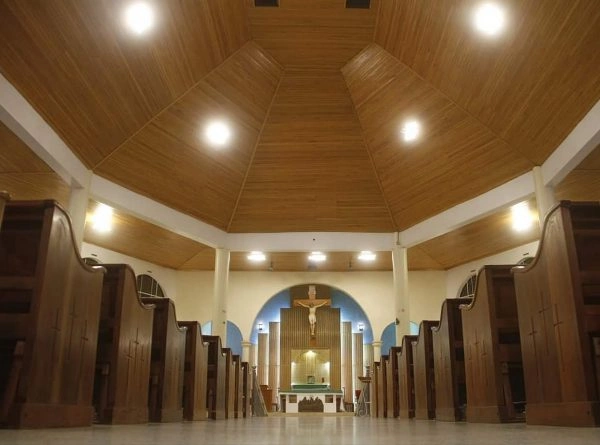
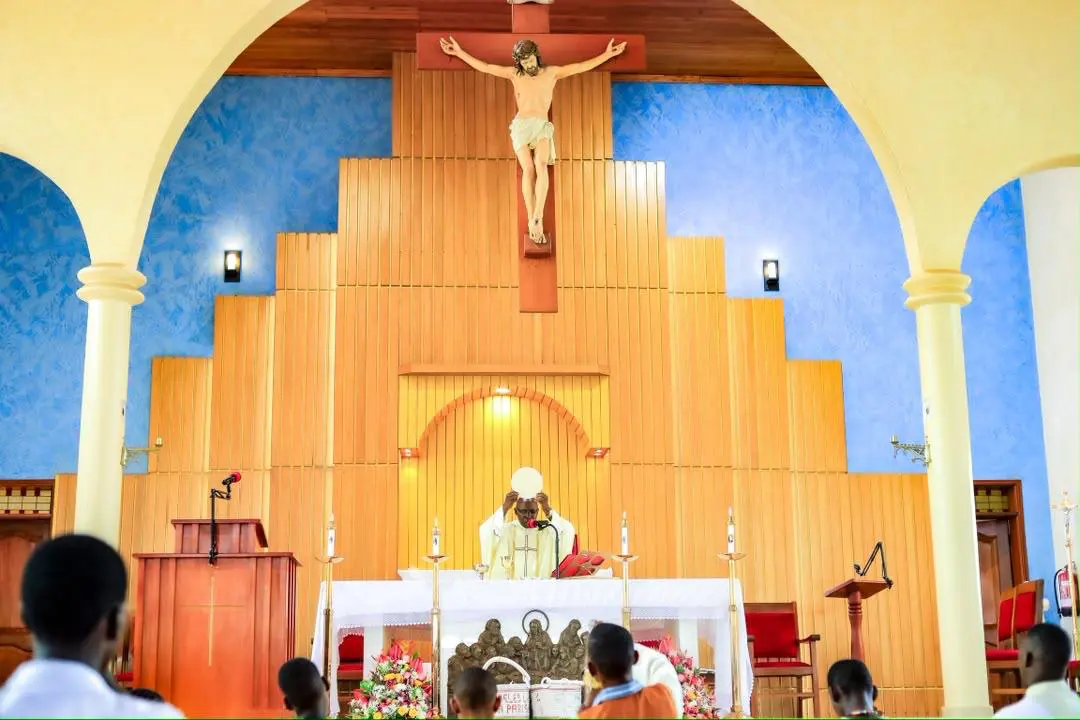
On the same occasion, the Archbishop consecrates the newly completed church for use.
Fr. Edward Muwanga, who by now has returned from sabbatical, is installed as the first Parish Priest of the newly created Ntinda Parish.
Charles Okoth Owor serves as Ssabakristu (Head of Laity) at the time of inauguration.
The parish community, numbering around 3,500 at the time, steps into this new chapter carrying forward three decades of lay leadership, memory, and sacrifice, from the founding pioneers who first gathered on a school verandah, to those who quietly funded the church one raffle ticket and film show at a time.